By Mike Frisch
One question I hear from anglers is “do the walleye fishing techniques I’ve used for years still work?” This question revolves around the use of traditional walleye fishing methods like jigging with live bait, pulling live bait rigs tipped with leeches or nightcrawlers, and crankbait trolling. The clear waters that prevail in lots of lakes now and the introduction and popularity of Forward-Facing Sonar (FFS)) have both changed how lots of people fish. Let me explain.
Back “in the day” many anglers jigged with minnows in the spring for walleyes, pulled various types of livebait rigs or trolled crankbaits in the summer, and resumed fishing with jigs and minnows during fall. These methods all usually involve pulling the boat and subsequently the baits over the walleyes. When FFS came to light several years ago, anglers started to realize that they could “see” fish out in front of the boat. They quickly adapted to casting baits to the fish before ever getting the boat close to them.
This scanning ahead and casting approach allowed anglers to cover more water out away from the boat, allowing them to target more than fish just below the boat. Plus, as waters continue to clear from the presence of zebra mussels, anglers were able to target spooky walleyes that might not let a boat pass over. Casting jigs tipped with nightcrawlers or plastics and fishing slip-bobber rigs quickly became the “go to” methods for many.
With that in mind, back to my original question. Can I still fish my old favorite methods for walleyes successfully? Yes! Earlier this summer, a partner and I got on a great FFS bite where we cast 3X Z-Too plastics on jigs to catch several big walleyes roaming a lake’s basin. A few days later, however, guide clients and I found scattered basin walleyes on another lake. Because my clients were inexperienced and not astute at casting to targets, I broke out the trolling rods, tied on Hornet crankbaits, and employed Off Shore Tackle planer boards to spread multiple lines. We enjoyed a good catch.
The following week on another guide trip, we used traditional 2D sonar to search a drop-off edge of a large point to locate a school of walleyes holding in 20- to 22-feet of water. This was on a lake with clear water, but with a good “walleye chop” present, I was confident that we could pull bottom bouncer rigs tipped with nightcrawlers over the fish. My hunch proved correct as my clients caught a bunch of “eater” walleyes.
FFS and clear waters have certainly changed how we fish walleyes. However, as the examples above illustrate, “old school” still gets it done at times as well! Good luck on the water and remember to include a youngster in your next outdoors adventure.
Mike Frisch hosts the popular Fishing the Midwest TV series. Visit www.fishingthemidwest.com to learn more.
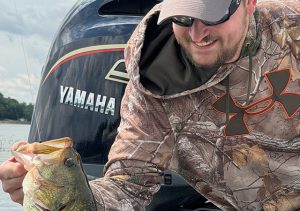
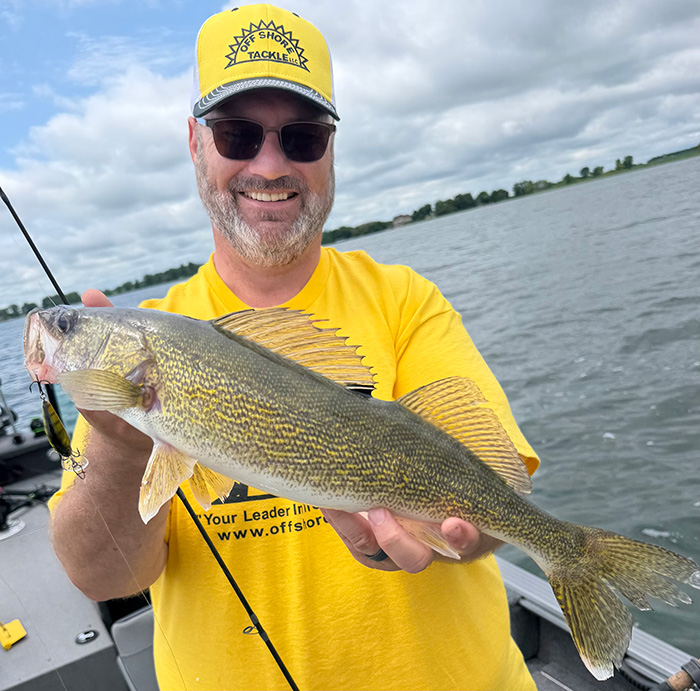
PHOTO – Nick DeShano with a walleye that ate a trolled crankbait.