By Mike Frisch and the Fishing the Midwest Team
Why Big Jig Fishing Is So Effective for Largemouth Bass
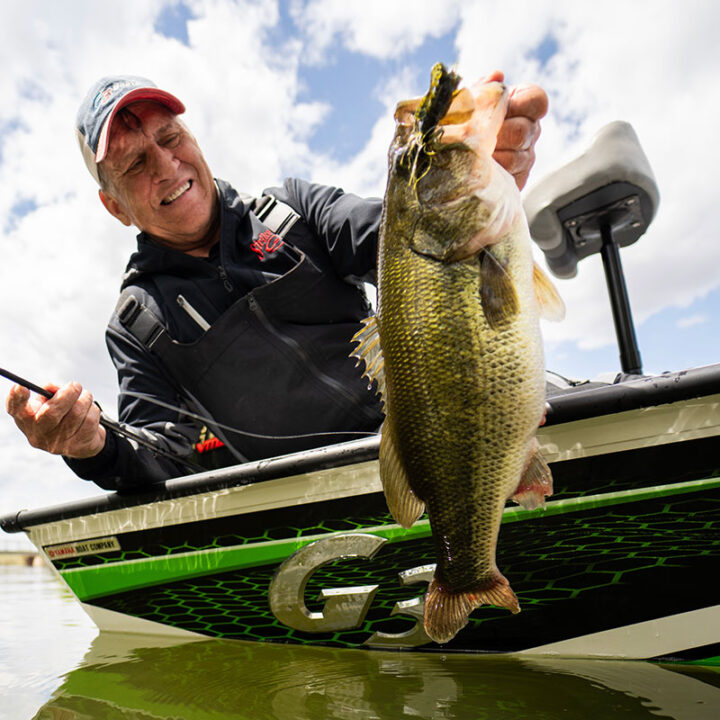
My favorite way to fish for largemouth bass is with a “big jig” which is a skirted style flipping and pitching jig. This jig, when tipped with a plastic trailer, can be fished in a variety of ways around a wide range of cover options including rocks, weeds, timber, and more. This summer, I have had a couple of experiences fishing jigs that have reminded me just how versatile, and productive, the big jig can be!
Weed Jig Fishing with a Hack Attack Flippin’ Jig
In mid-June I was on one of my favorite lakes near my home pitching jigs to weeds in water depths from 8 to 12 feet. My lure choice was one of my all-time favorites, a ½ ounce Hack Attack Fluoro Flippin’ Jig tipped with a Rage Craw. This combination has put countless numbers of bass in my boat over the years.
Short Pitching and Initial Fall Bite Strategy
Often, when fishing the Hack Attack in heavy weeds, I make short pitches, let the jig settle in and then hop it and maybe shake it a time or two before reeling up and making another pitch. Most of the time the bites come on the initial fall so I don’t spend a lot of time working the jig after it falls, rather reeling up and pitching again.
Snap-and-Fall Retrieve Adjustment
On this day, I happened to hang my jig up on a weed on one of my pitches. Snapping my rod aggressively, the jig popped loose and, on the fall back, an aggressive largemouth violently attacked it! Realizing maybe the fish wanted that style retrieve, I quickly adjusted. My change involved pitching the jig, letting it hit bottom and, if it didn’t get eaten on the initial fall, I would aggressively snap it off bottom and let if fall. This approach yielded several bites, lots of these fish were in the 3-pound class range. I will remember that day and that retrieve variation!
Fishing a Structure Jig on Rock-to-Weed Transitions
Late July found a partner and me on a hot bite for largemouth bass fishing shallow rock piles that transitioned into weeds. Several fat largies bit our Texas rigs and other lures. However, the rocks “ate” lots of our rigging weights and so I made the switch to a ½-ounce Denny Brauer Structure Jig and tipped it with a Rage Craw. This jig has a unique shape that works great for crawling along bottom.
Crawling a Jig and Craw on Rocky Bottom
Casting the jig/craw combo to the rocks, I would use my rod to slowly pull it back to the boat, doing my best to imitate a crawfish moving along bottom. This change quickly yielded a bunch of bites, with several fish in the 4-pound size range. Key to the presentation was the use of a Bama Craw colored jig and craw as that pattern does a great job mimicking crayfish coloring.
Jig Fishing Gear Setup for Heavy Cover
Another key to success was the use of a high speed 8:3:1 reel as the fish would often pick up the jig and quickly come at the boat. The high-speed Custom Pro reel I was using helped me catch up to the fish and get solid hooksets. Plus, this reel is super smooth and lightweight. I fish it on a 7’ 6” Greg Hackney Signature Series pitching rod. This rod has the power to horse big fish from heavy cover, yet it’s lightweight so it doesn’t wear me out during a full day fishing. Twenty-pound test CONTRA fluorocarbon line completes my rod/reel/line setup when jig fishing.
Fishing a jig/craw combo is a productive and enjoyable way to catch largemouth bass. The two scenarios above illustrate just a couple of the many ways to fish jigs, but they’re ways you may want to incorporate into your jig fishing arsenal.
As always, enjoy your time on the water and remember to include a youngster in your next outdoors adventure!